A strong first week gives a virtual assistant context, secure access, achievable work and fast feedback. The goal is not to transfer every task immediately. It is to establish how the business communicates, how quality is judged and how the assistant should act when the process does not cover a situation.
Prepare before day one
Create the role summary, first-week schedule, process documents, account list, communication rules and initial task. Confirm who approves access and who answers questions. For business owners preparing to onboard a new virtual assistant, this decision should connect directly to a structured first week that builds confidence, protects access and produces an early win. That keeps the discussion grounded in business value instead of surface-level features or assumptions.
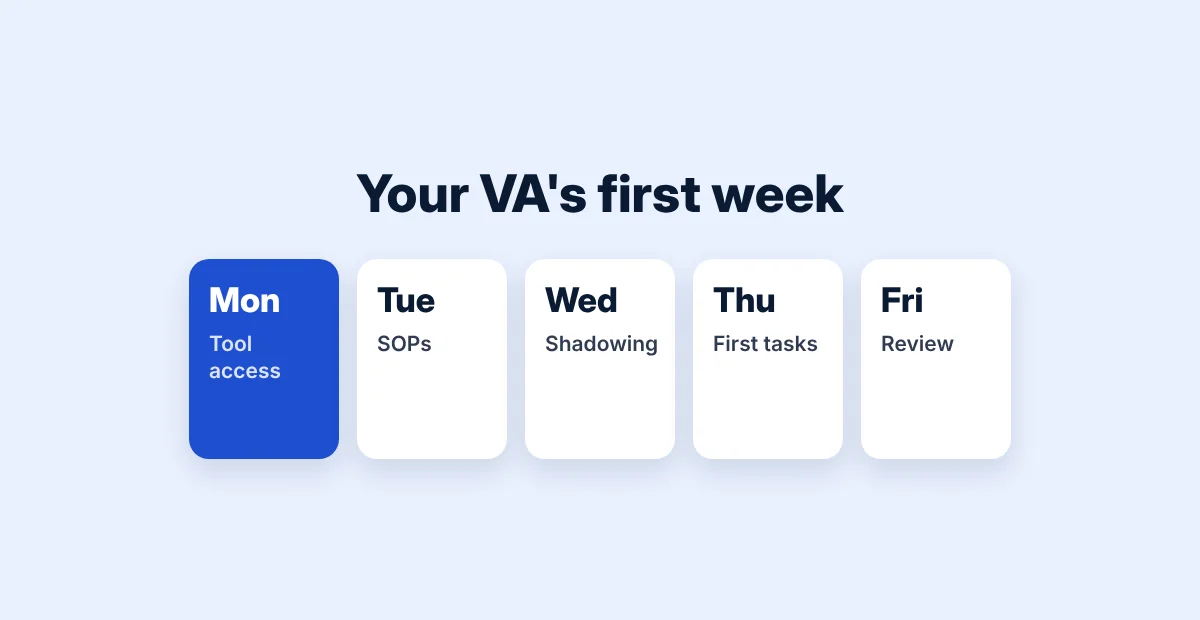
Day one: context and expectations
Explain the business, customers, services, priorities and definition of success. Review working hours, response expectations, meetings and escalation channels. For business owners preparing to onboard a new virtual assistant, this decision should connect directly to a structured first week that builds confidence, protects access and produces an early win. That keeps the discussion grounded in business value instead of surface-level features or assumptions.
Day two: tools and secure access
Provision individual accounts through secure methods, verify permissions and demonstrate the systems the assistant will use. Avoid sharing personal credentials in chat or documents. For business owners preparing to onboard a new virtual assistant, this decision should connect directly to a structured first week that builds confidence, protects access and produces an early win. That keeps the discussion grounded in business value instead of surface-level features or assumptions.
Day three: process walkthroughs
Demonstrate one complete workflow, including normal steps, examples, exceptions and quality checks. Ask the assistant to explain it back to reveal gaps. For business owners preparing to onboard a new virtual assistant, this decision should connect directly to a structured first week that builds confidence, protects access and produces an early win. That keeps the discussion grounded in business value instead of surface-level features or assumptions.
Day four: supervised execution
Assign a small batch of real work with a review checkpoint. Correct the process documentation when questions expose missing context. For business owners preparing to onboard a new virtual assistant, this decision should connect directly to a structured first week that builds confidence, protects access and produces an early win. That keeps the discussion grounded in business value instead of surface-level features or assumptions.
Day five: review and next plan
Review results, communication, access, blockers and confidence. Agree on next-week volume, new responsibilities and the schedule for feedback. For business owners preparing to onboard a new virtual assistant, this decision should connect directly to a structured first week that builds confidence, protects access and produces an early win. That keeps the discussion grounded in business value instead of surface-level features or assumptions.
Create a useful feedback loop
Give specific feedback tied to the documented standard. Invite questions, record decisions and separate training issues from performance issues. For business owners preparing to onboard a new virtual assistant, this decision should connect directly to a structured first week that builds confidence, protects access and produces an early win. That keeps the discussion grounded in business value instead of surface-level features or assumptions.
Scale responsibility gradually
Increase volume and complexity only after accuracy is stable. Schedule access reviews and maintain a visible backlog so priorities remain clear. For business owners preparing to onboard a new virtual assistant, this decision should connect directly to a structured first week that builds confidence, protects access and produces an early win. That keeps the discussion grounded in business value instead of surface-level features or assumptions.
Build a 30-day implementation plan
Turn the guide into action by choosing one owner, one baseline metric and one outcome for the next 30 days. During week one, document the current state and remove obvious errors. During week two, implement the smallest high-value improvement. During week three, observe real use and collect questions. During week four, compare the new result with the baseline and decide what to standardize, revise or stop.
Keep the plan intentionally narrow. Teams make more progress when they complete one measurable cycle than when they open ten initiatives at once. Store decisions, credentials, content and process notes in systems the team controls. When outside specialists are involved, confirm ownership, access and handoff requirements before work begins.
If you want help translating this plan into a working system, explore DigiDesk’s virtual assistance services or book a strategy call.
Frequently asked questions
What should a VA do on the first day?
Learn the business context, communication rules, role outcomes and first simple workflow.
How should passwords be shared?
Use individual accounts and a reputable password manager rather than sending passwords in messages.
How quickly should a VA take over tasks?
Transfer work gradually based on demonstrated accuracy and confidence.
How often should we meet?
Meet more frequently during onboarding, then reduce frequency when the work and communication rhythm are stable.
Next steps
A structured first week that builds confidence, protects access and produces an early win starts with a clear baseline and a focused first improvement. Review the checklist, select the action closest to revenue or customer experience and assign it to one owner. Measure what changes, document what the team learns and use that evidence to decide the next investment.