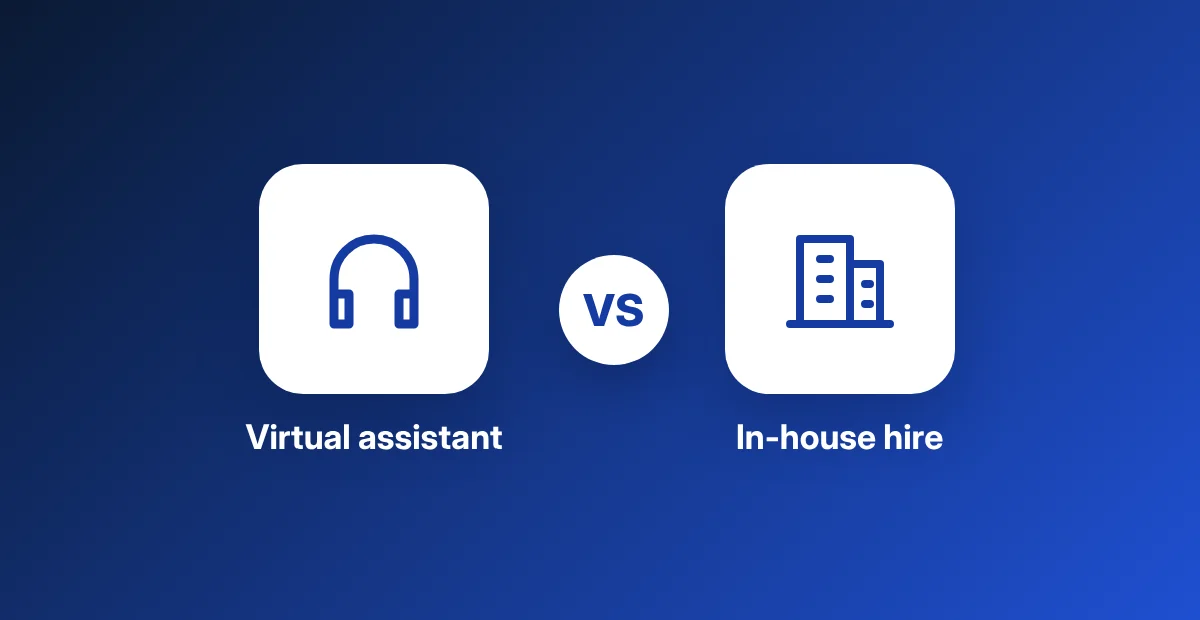
A virtual assistant and an in-house employee can both create capacity, but the working relationship, cost structure and management requirements differ. The correct choice depends on the work itself, required availability, collaboration intensity, security needs and how permanent the role should be.
Define the role before the worker type
List outcomes, recurring tasks, decisions, tools, hours and collaboration needs. Choosing a worker category before defining the role can hide the real requirement. For business owners deciding how to add administrative or operational capacity, this decision should connect directly to a staffing decision based on role requirements and total management cost. That keeps the discussion grounded in business value instead of surface-level features or assumptions.
Compare total cost
Include recruitment, onboarding, payroll or provider fees, equipment, software, benefits, workspace, management time and replacement risk. Headline hourly rates are incomplete. For business owners deciding how to add administrative or operational capacity, this decision should connect directly to a staffing decision based on role requirements and total management cost. That keeps the discussion grounded in business value instead of surface-level features or assumptions.
Availability and flexibility
Virtual support can offer flexible capacity or specialized schedules, while an employee may provide stable availability and deeper integration. Confirm time-zone and coverage expectations. For business owners deciding how to add administrative or operational capacity, this decision should connect directly to a staffing decision based on role requirements and total management cost. That keeps the discussion grounded in business value instead of surface-level features or assumptions.
Management and communication
Both models require goals, documentation, feedback and accountability. Remote work makes written communication and structured check-ins especially important. For business owners deciding how to add administrative or operational capacity, this decision should connect directly to a staffing decision based on role requirements and total management cost. That keeps the discussion grounded in business value instead of surface-level features or assumptions.
Control and company knowledge
Employees often accumulate broad institutional context. A virtual assistant can also develop deep knowledge when the relationship is stable and access to context is intentional. For business owners deciding how to add administrative or operational capacity, this decision should connect directly to a staffing decision based on role requirements and total management cost. That keeps the discussion grounded in business value instead of surface-level features or assumptions.
Security and access
Classify data, use least-privilege accounts, control devices where appropriate and document offboarding. Worker location alone does not determine security quality. For business owners deciding how to add administrative or operational capacity, this decision should connect directly to a staffing decision based on role requirements and total management cost. That keeps the discussion grounded in business value instead of surface-level features or assumptions.
When a virtual assistant fits
A VA often suits defined recurring work, variable demand, remote-friendly tools and organizations that can manage outcomes through documented processes. For business owners deciding how to add administrative or operational capacity, this decision should connect directly to a staffing decision based on role requirements and total management cost. That keeps the discussion grounded in business value instead of surface-level features or assumptions.
When an employee fits
An employee may fit a permanent, central role requiring constant cross-functional collaboration, proprietary judgment, on-site presence or a long internal career path. For business owners deciding how to add administrative or operational capacity, this decision should connect directly to a staffing decision based on role requirements and total management cost. That keeps the discussion grounded in business value instead of surface-level features or assumptions.
Build a 30-day implementation plan
Turn the guide into action by choosing one owner, one baseline metric and one outcome for the next 30 days. During week one, document the current state and remove obvious errors. During week two, implement the smallest high-value improvement. During week three, observe real use and collect questions. During week four, compare the new result with the baseline and decide what to standardize, revise or stop.
Keep the plan intentionally narrow. Teams make more progress when they complete one measurable cycle than when they open ten initiatives at once. Store decisions, credentials, content and process notes in systems the team controls. When outside specialists are involved, confirm ownership, access and handoff requirements before work begins.
If you want help translating this plan into a working system, explore DigiDesk’s virtual assistance services or book a strategy call.
Frequently asked questions
Is a virtual assistant always cheaper?
Not always. Compare total cost, productivity, management and the value of the required availability and skills.
Can a VA work full time?
Many do, but the engagement model and legal classification vary. Use appropriate agreements and professional advice.
Which option is more secure?
Security depends on systems, access controls, policies and behavior rather than job title alone.
Can I start with a VA and hire later?
Yes. A documented role can help validate workload before a longer-term staffing decision.
Next steps
A staffing decision based on role requirements and total management cost starts with a clear baseline and a focused first improvement. Review the checklist, select the action closest to revenue or customer experience and assign it to one owner. Measure what changes, document what the team learns and use that evidence to decide the next investment.