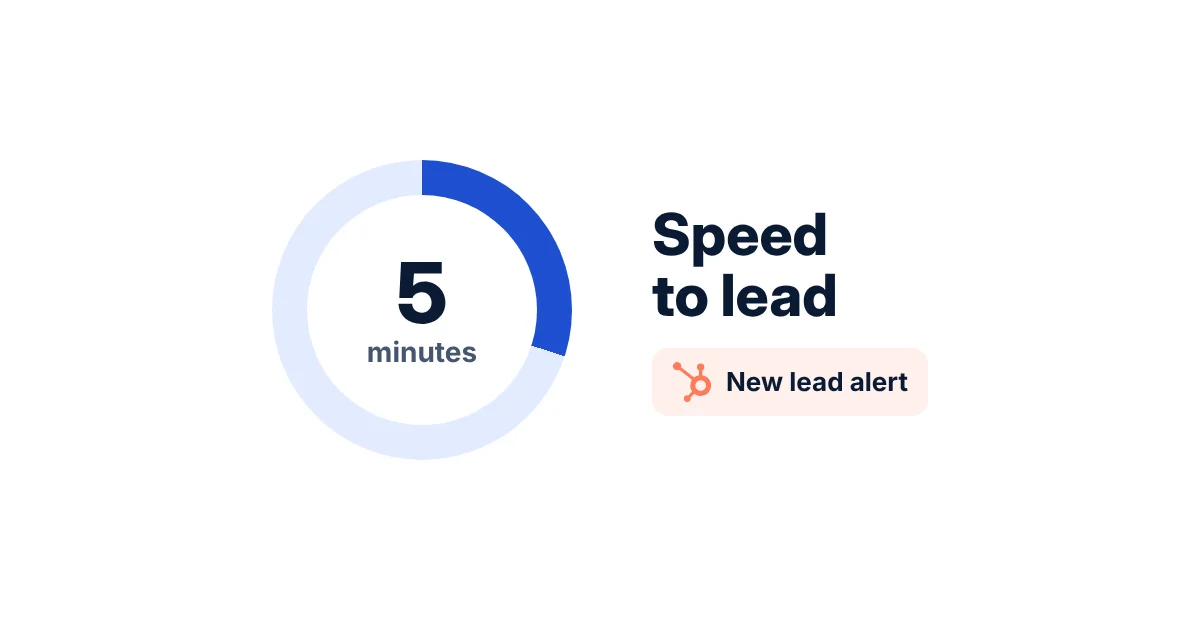
A prospect’s intent is often strongest immediately after submitting a form, starting a chat or requesting a quote. Speed to lead is the time between that signal and a useful response. Improving it requires more than an automatic email: the business needs clean capture, dependable routing, clear ownership and a human follow-up process.
Define a meaningful response
A confirmation message is useful, but it is not the same as a qualified human response. Define which event stops the clock and what quality standard the first contact must meet. For service businesses that rely on inbound leads, this decision should connect directly to a measurable response system that acknowledges every inquiry and reaches qualified prospects quickly. That keeps the discussion grounded in business value instead of surface-level features or assumptions.
Remove friction from lead capture
Ask only for information needed to route and begin the conversation. Validate fields, preserve tracking data and test forms on mobile devices and slow connections. For service businesses that rely on inbound leads, this decision should connect directly to a measurable response system that acknowledges every inquiry and reaches qualified prospects quickly. That keeps the discussion grounded in business value instead of surface-level features or assumptions.
Route every inquiry correctly
Use service type, location, urgency, availability and account status to assign the lead. Every route needs a named owner and a fallback when that person is unavailable. For service businesses that rely on inbound leads, this decision should connect directly to a measurable response system that acknowledges every inquiry and reaches qualified prospects quickly. That keeps the discussion grounded in business value instead of surface-level features or assumptions.
Send immediate acknowledgment
Confirm receipt, set expectations and provide a useful next step. Keep automated messages honest so prospects know when a person will respond. For service businesses that rely on inbound leads, this decision should connect directly to a measurable response system that acknowledges every inquiry and reaches qualified prospects quickly. That keeps the discussion grounded in business value instead of surface-level features or assumptions.
Create CRM alerts and tasks
Push complete lead context to the CRM, notify the owner in the channel they monitor and create a task with a deadline. Avoid noisy alerts that train the team to ignore them. If you are still tracking leads in a spreadsheet, our guide on how to choose a CRM for your small business covers what to look for. For service businesses that rely on inbound leads, this decision should connect directly to a measurable response system that acknowledges every inquiry and reaches qualified prospects quickly. That keeps the discussion grounded in business value instead of surface-level features or assumptions.
Build a follow-up sequence
Use a short, respectful mix of calls, email and text where appropriate and permitted. Stop sequences when the prospect responds or becomes ineligible. For service businesses that rely on inbound leads, this decision should connect directly to a measurable response system that acknowledges every inquiry and reaches qualified prospects quickly. That keeps the discussion grounded in business value instead of surface-level features or assumptions.
Handle after-hours leads
Set realistic expectations, offer self-scheduling where suitable and define next-business-day ownership. Emergency inquiries may need a separate process. For service businesses that rely on inbound leads, this decision should connect directly to a measurable response system that acknowledges every inquiry and reaches qualified prospects quickly. That keeps the discussion grounded in business value instead of surface-level features or assumptions.
Report and improve response time
Measure median and percentile response time, contact rate, qualification rate, booked outcomes and source. Review misses by cause so the process improves instead of blaming individuals. For service businesses that rely on inbound leads, this decision should connect directly to a measurable response system that acknowledges every inquiry and reaches qualified prospects quickly. That keeps the discussion grounded in business value instead of surface-level features or assumptions.
Build a 30-day implementation plan
Turn the guide into action by choosing one owner, one baseline metric and one outcome for the next 30 days. During week one, document the current state and remove obvious errors. During week two, implement the smallest high-value improvement. During week three, observe real use and collect questions. During week four, compare the new result with the baseline and decide what to standardize, revise or stop.
Keep the plan intentionally narrow. Teams make more progress when they complete one measurable cycle than when they open ten initiatives at once. Store decisions, credentials, content and process notes in systems the team controls. When outside specialists are involved, confirm ownership, access and handoff requirements before work begins.
If you want help translating this plan into a working system, explore DigiDesk’s business automation services or book a strategy call.
Frequently asked questions
What is speed to lead?
It is the elapsed time between a prospect’s inquiry and a meaningful business response.
Does an automated email count?
It counts as acknowledgment, but most teams should measure human contact separately.
How fast should a business respond?
As quickly as the business can respond usefully and consistently. Set a target based on customer urgency and staffing.
What tools improve lead response?
Forms, CRM routing, alerts, scheduling, phone systems and approved automation can work together when ownership is clear.
Next steps
A measurable response system that acknowledges every inquiry and reaches qualified prospects quickly starts with a clear baseline and a focused first improvement. Review the checklist, select the action closest to revenue or customer experience and assign it to one owner. Measure what changes, document what the team learns and use that evidence to decide the next investment.